Scholarships remain one of the most effective ways to fund your education without taking on heavy student debt. With strong competition for every award, a polished, professional scholarship application can set you apart from hundreds—or thousands—of other applicants.
A winning application doesn’t just list your accomplishments; it tells your unique story, demonstrates your potential, and shows exactly why you deserve the funding.
This comprehensive, evergreen guide provides a proven template and practical strategies to help you create a standout scholarship application that works for any program, any year.
Understanding the Scholarship Application Process
Most scholarship applications include several standard components:
- Academic transcripts and GPA
- Letters of recommendation
- Personal statement or essay
- Resume or list of extracurricular activities
- Proof of financial need (for some awards)
- Additional forms or portfolios
Pro tip: Always read the full instructions and eligibility criteria before starting. Note the deadline, required file formats, word limits, and submission method. Missing even one requirement can disqualify your application instantly.
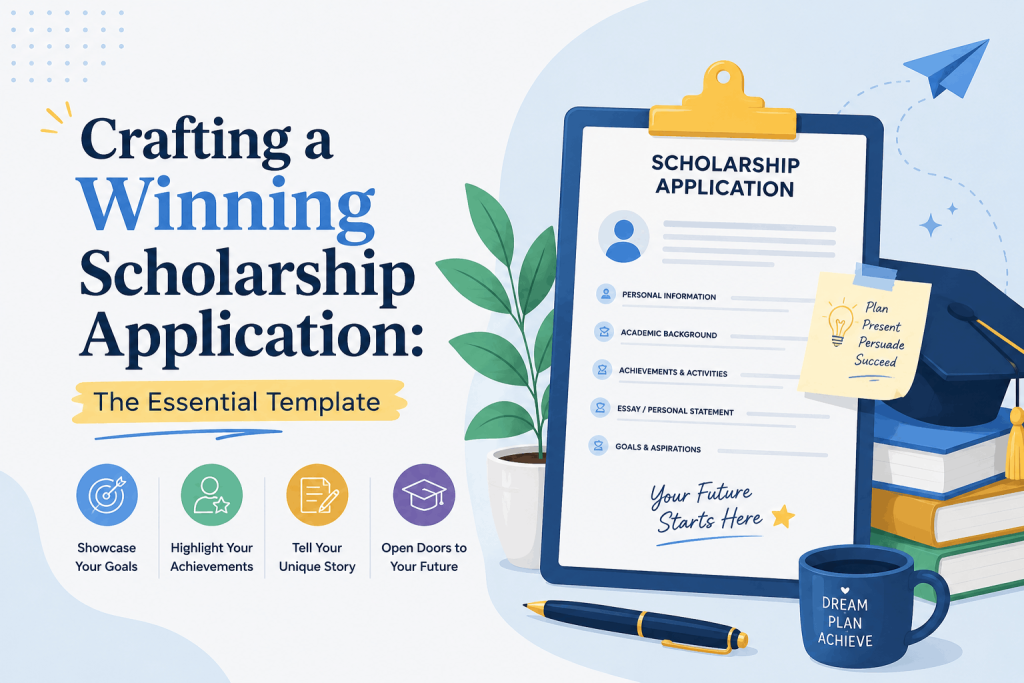
The Essential Scholarship Application Template
A clear, logical structure helps selection committees quickly understand your strengths. Use this proven framework:
1. Strong Introduction / Personal Statement Hook
Start with an attention-grabbing opening that reveals your motivation. Share a brief personal story, challenge you’ve overcome, or passion that drives your academic goals. Clearly state why you’re applying for this specific scholarship.
2. Personal and Background Information
Provide relevant context about your background, family, challenges, or circumstances that shaped your journey. This section helps humanize your application.
3. Academic Achievements
Highlight your strongest academic accomplishments:
- GPA and class rank
- Honors, awards, and AP/IB courses
- Research projects, theses, or notable class performance
Use specific examples and quantify results where possible (e.g., “Achieved top 5% in a class of 300 students”).
4. Extracurricular Activities and Leadership
Show you’re well-rounded. Include:
- Sports, clubs, and organizations
- Leadership positions (team captain, club president, etc.)
- Skills developed through these activities
5. Community Service and Volunteer Work
Demonstrate your commitment to giving back. Focus on impact rather than just listing activities. Example: “Organized a community cleanup that removed 500+ pounds of waste and engaged 75 volunteers.”
6. Future Goals and How the Scholarship Fits
Explain your career aspirations and how the scholarship will help you achieve them. Connect your goals to the mission or values of the scholarship provider.
7. Powerful Conclusion
Summarize your key strengths, restate your enthusiasm, and end on a confident, forward-looking note.
Showcasing Your Achievements Effectively
Focus on quality over quantity. Choose 4–6 of your strongest examples and support them with concrete evidence:
- Numbers and results (“Led team to regional championship; increased membership by 40%”)
- Specific roles and responsibilities
- Lessons learned and skills gained
Tailor every achievement to the scholarship’s focus—whether it’s academic excellence, leadership, community service, or a specific field of study.
Writing a Winning Scholarship Essay
The essay is often the most important part of your application. Follow these proven strategies:
- Understand the prompt — Answer it directly.
- Brainstorm and outline — Organize your thoughts before writing.
- Create a clear structure:
- Engaging opening
- Strong thesis statement
- Body paragraphs with specific examples
- Memorable conclusion
- Show, don’t tell — Use vivid stories instead of generic statements.
- Be authentic — Let your genuine voice and personality shine through.
- Tailor the essay — Customize it for each scholarship.
- Edit ruthlessly — Eliminate grammar errors, awkward phrasing, and repetition.
Aim for clarity, emotional connection, and a compelling narrative that aligns with the scholarship’s goals.
Common Mistakes to Avoid
- Spelling and grammatical errors
- Exceeding word or page limits
- Submitting generic, non-tailored essays
- Missing deadlines
- Forgetting to include all required documents
- Using overly formal or robotic language
Final checklist before submission:
- Proofread multiple times (read aloud or use tools like Grammarly)
- Get feedback from teachers, mentors, or trusted friends
- Save copies of everything
- Submit early to avoid technical issues
- Confirm receipt if possible
Final Thoughts
Crafting a winning scholarship application takes time and effort, but the rewards are life-changing. By using this template, focusing on your unique story, and paying close attention to detail, you significantly increase your chances of success.
Start early, stay organized, and believe in your potential. Every scholarship you win brings you closer to your educational and career dreams.
Ready to get started? Save this guide, pick your first scholarship, and begin building your strongest application yet.