Scholarships are one of the best ways to fund your education without accumulating heavy student debt. However, competition is intense, with thousands of talented students applying for the same awards.
A winning scholarship essay can be the deciding factor that sets you apart from the crowd.
One of the most powerful approaches is using personal narratives in your scholarship essays.
In this guide, we explore why personal stories matter, share real examples of effective narratives, and provide practical tips to help you craft a compelling essay that captures attention and wins funding.
Importance of Personal Narratives in Scholarship Essays
Scholarship essays are much more than formal applications — they are personal statements that give the selection committee a deeper look into who you are.
Personal narratives add authenticity and emotional depth to your writing. They allow you to showcase your unique personality, life experiences, challenges overcome, and core values.
A well-told story helps create a genuine connection with the readers and makes your essay memorable among hundreds of similar applications. When done effectively, personal narratives can significantly boost your chances of winning the scholarship.
Examples of Effective Personal Narratives in Scholarship Essays
Here are some inspiring examples of personal narratives that have helped students secure scholarships:
- Overcoming Financial Hardship: A student from a low-income family shared how they balanced part-time jobs and caregiving responsibilities for younger siblings while maintaining excellent grades. Their story highlighted resilience, time management, and determination to break the cycle of poverty through education.
- Fighting Discrimination: Another applicant described experiences with racial or gender discrimination and how these challenges inspired them to become an advocate for social justice in their school and community. The narrative demonstrated leadership, empathy, and a commitment to positive change.
- Passion Through Service: A student wrote about their volunteer work at a local nonprofit, explaining how helping others sparked a lifelong passion for public service and influenced their choice of major and career goals.
These examples succeed because they are honest, specific, and show growth rather than simply listing achievements.
Tips for Writing Compelling Personal Narratives for Scholarship Essays
Use these proven strategies to strengthen your scholarship essay:
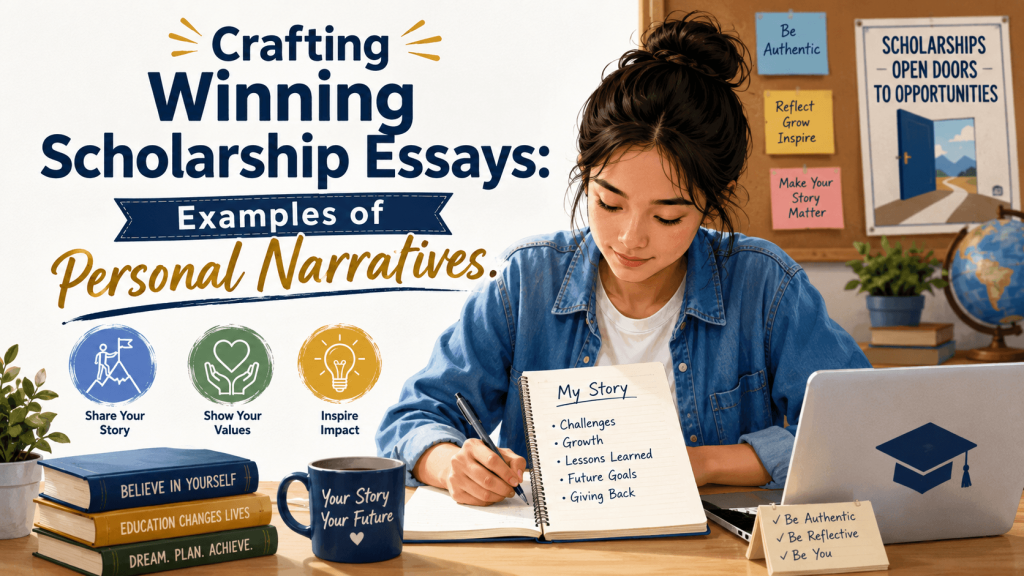
- Be Authentic: Write about experiences that are truly meaningful to you. Genuine emotion and honesty resonate more than exaggerated stories.
- Show, Don’t Tell: Use vivid descriptions, dialogue, and storytelling techniques to bring your experiences to life instead of simply stating facts.
- Stay Concise and Focused: Stick to the most impactful moments and avoid unnecessary details. Every sentence should support your main message.
- Include Reflection: Don’t just recount events — explain what you learned, how you grew, and how the experience shaped your goals and character.
- Edit and Revise Thoroughly: Proofread multiple times and seek feedback from teachers, mentors, or counselors. A polished, error-free essay shows professionalism and care.
Conclusion
Crafting a winning scholarship essay takes time and effort, but incorporating strong personal narratives gives you a powerful advantage.
By being authentic, using vivid storytelling, reflecting on your growth, and carefully revising your work, you can create an essay that stands out and convinces the committee you deserve the award.
Start brainstorming your own story today. With dedication and the right approach, your personal narrative can help turn your academic dreams into reality and secure the funding you need for a brighter future.